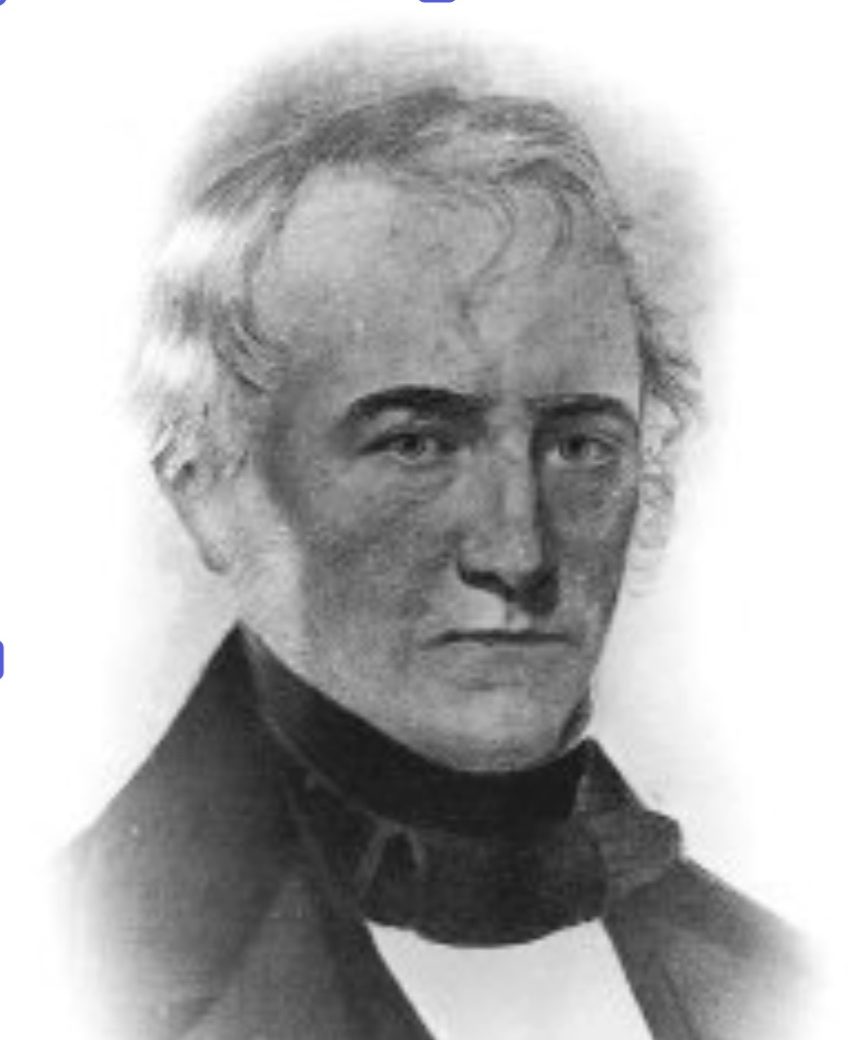
Colby devised a system of working for the Irish Survey that prioritised quality and accuracy over speed, and at its heart was traceability.
Colby’s temperament found institutional form in what became known as the Colonel’s System, or later as Colby’s System, which was codified in his blue book of instructions for the Irish Survey. It was a system of working that prioritised quality and accuracy over speed, and at its heart was traceability. Progress under this regime was undeniably slow, particularly in the early years of the Irish Survey, but Colby remained convinced that once accuracy was lost, it could never be recovered. He was a perfectionist and firmly stuck to his system designed to achieve the quality and accuracy demanded of the Survey in Ireland, which he defended vigorously throughout his career, retaining a “morbid fear” of criticism of it.
Colby envisaged that the “map of Ireland will be tendered the most complete work of the kind which has ever been attempted in any country and that its distinguishing advantage will consist in the quality and accuracy of the information it will contain”. His map demanded a more accurate approach than the one-inch map in England, where he thought “too much sketching” and the employment of unqualified civilian assistants to speed things up had been at the expense of quality. In England, civilian surveyors had often been in “want of sufficient skill, and sufficient integrity”, a phrase echoed by Wellington’s brother, the Lord Lieutenant of Ireland, about Irish surveyors. [ii]
Colby intended to take a different approach in Ireland. He set the standards, methods, and expectations in advance, creating a system that recorded and documented the survey work so that features could be identified again in the office if required. He recognised that otherwise, a costly return to the field would follow, and the future character of the survey would be “depreciated.” Seeking to balance quality and speed, Colby considered that “Rapidity of execution alone will not serve the present.”
His system reflected the principles of efficiency and division of labour articulated by Adam Smith in 1776.[iii] Like Smith’s ideal productive enterprise, the survey was broken into clearly defined, specialised operations, measurement, triangulation, field observation, drafting, and checking, each governed by uniform rules and rigorous oversight. This division of labour meant, for example, that no surveyor plotted his own work. Splitting the work into several separate operations gave the advantage of the men being able to become proficient very quickly and maintained a high degree of accuracy, reducing errors and avoiding costly duplication of effort. It allowed personnel to develop proficiency quickly, while centralised control ensured consistency and quality. In effect, Colby transformed mapmaking from an individual craft into an organised system of production, where accuracy, accountability, and efficiency were embedded in the structure of the work itself.
He resisted appointing civilian surveyors, who all had their own way of doing things and were used to having the freedom to do it their own way. Instead, he insisted on a uniform military system. Soldiers were to be used and trained in “perseverance and research” to ensure consistency. His system used military orders to prevent disobedience, trace errors, and maintain quality. Work was divided into separate operations to minimise errors and allow soldiers to become proficient in specific tasks quickly. His instructions, detailed in a Blue Book, were meticulously applied, and all work was thoroughly checked. [iv]
When the survey was proposed, many Engineers Corps soldiers were unemployed after the Napoleonic Wars, although finding men with the appropriate faculties proved to be difficult. Those too long in barracks lacked motivation, and many recruits were illiterate. The most able were selected and sent to Chatham before they developed “idle habits.” Additionally, five promising 14-year-old boys from the Hibernian School in Dublin, who showed superior progress and volunteered, were also sent to Chatham for training. [v]
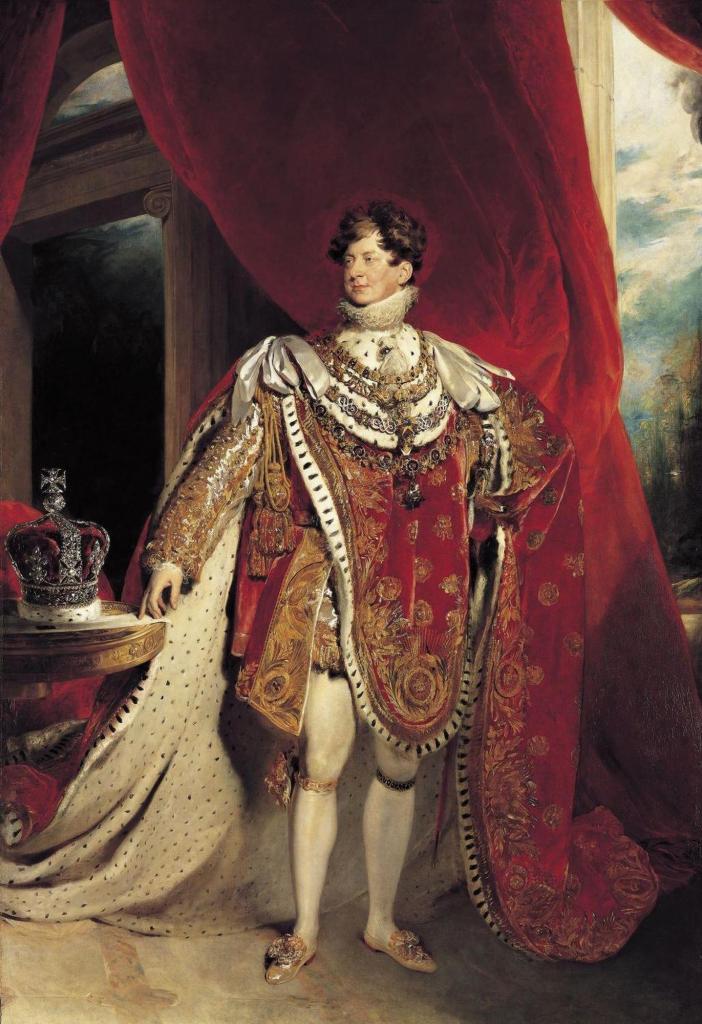
“Whereas you have represented unto us that it will be advantageous to Our Service to raise an additional company of Royal Sappers and Miners to be employed in the operations of the Survey of Ireland ….”
George IV Warrant, 1824 [i]
On the 1st of December 1824, a Royal Warrant authorised the formation of a Survey Company at Colby’s request. Sixty-two men were selected, trained at Chatham under Lieutenant Colonel Pasley, and moved to Ireland. [vi] By 1825, three Survey Companies (13th, 14th, and 19th), with one hundred men in each, had begun work, motivated by extra allowances and higher social standing. Local labourers were hired for tasks like “dragging the Chain” because they were cheaper than soldiers and, in Colby’s view, provided a valuable link to the local people.
The work could begin.
[i] “13 Fld Svy Sqn 150th Foundation Anniversary Souvenir Programme, and History of 13 Company”; https://www.militarysurvey.org.uk/ accessed 12/9/2023.
[ii] O’Cionnath, 2024.
[iii] An Inquiry into the Nature and Causes of the Wealth of Nations. Book I, Chapter I, “Of the Division of Labour.”, Adam Smith (1776).
[iv] Colby’s Instruction, 1825, NAI, OS/13/1.
[v] Lt. Col. Colby’s First Report to Sir Henry Hardinge, KCB, 1826; NAI OS/1/1
By subscribing, you will be notified of new posts.
